
Keynote Speakers

Prof. Metin Akay
John S Dunn Endowed Chair Professor
University of Houston
Department of Biomedical Engineering
Houston, TX, USA
Short Biography
Dr. Akay is the John S Dunn Endowed Professor of the Biomedical Engineering Department at the University of Houston. He earned his BS and MS degrees in Electrical Engineering (EE) from Bogazici University, Istanbul, Turkiye. Then, he pursued and obtained his PhD in Biomedical Engineering (BME) from Rutgers University, NJ, the United States.
He is proud of the BME department he established at the University of Houston, which is a unique translational research environment, focused on integrating innovative research and academic programs to meet the demands and requirements of the ever-changing global economy that continues to drive health-care technology, management, and delivery and served as the founding chair for nearly 15 years.
He received honorary doctorates from Aalborg Silesian and Pécs Universities and professorship from the Technical University of Crete. He has authored more than 20 books and 180 journal papers, along with 200 conference papers and abstracts and delivered over 200 keynote and plenary talks at respected international conferences, including IEEE ICASSP twice.
He is a recipient of the IEEE EMBS Career, Early Career and Service Awards, an IEEE Third Millennium Medal, and the prestigious Zworykin Award from the International Federation for Medical and Biological Engineering (IFMBE). He is a life fellow of IEEE, fellow of the Institute of Physics (IOP), the International Academy of Medical and Biological Engineering (IAMBE), the American Institute for Medical and Biological Engineering (AIMBE), and the American Association for the Advancement of Science (AAAS).
His research focuses on the development of novel therapeutics for the treatment of Cancer, neurotechnology for addiction and pain, brain cancer chips, and coronary occlusion.
Keynote Title
Artificial Intelligence–Enabled Biomarkers for Personalized and Dynamic Pain Assessment

Prof. Dimitrios I. Fotiadis
FIEEE, FEAMBES, FIAMBE, FAIAA
Prof. of Biomedical Engineering, University of Ioannina / BRI – FORTH
Head of the Unit of Medical Technology and Intelligent Information Systems
Editor in Chief IEEE Open Journal of Engineering in Medicine and Biology
Director MSc In Digital Health
Ioannina, GREECE
Short Biography
Prof. Dimitrios I. Fotiadis (Male), received the Diploma degree in chemical engineering from the National Technical University of Athens, Athens, Greece, and the Ph.D. degree in chemical engineering and materials science from the University of Minnesota, Minneapolis. He is currently a Professor of Biomedical Engineering in the Department of Materials Science and Engineering, University of Ioannina, Ioannina, Greece, where he is also the Director of the Unit of Medical Technology and Intelligent Information Systems, an Affiliated Member of Foundation for Research and Technology Hellas, Biomedical Research Institute and Director MSc in Digital Health. He is member of the board of Michailideion Cardiac Center. He was a Visiting Researcher at the RWTH, Aachen, Germany, and the Massachusetts Institute of Technology, Boston. He has coordinated and participated in more than 250 R&D funded projects (in FP6, FP7, H2020, Horizon Europe and national Projects), being the coordinator (e.g. INSILC, TAXINOMISIS, HOLOBALANCE, CARDIOCARE, DECODE, etc.) and/or Technical coordinator (e.g. SMARTOOL, KARDIATOOL, TO_AITION, etc.). He is the author or coauthor of more than 500 papers in scientific journals, more than 600 papers in peer-reviewed conference proceedings, and more than 50 chapters in books. He is also the author/editor of 30 books. His work has received more than 36,400 citations (h-index=87). He served as Editor in Chief of IEEE Journal of Biomedical and Health Informatics from 2017-2024 and he is IEEE EMBS Fellow, EAMBES Fellow, Fellow of IAMBE, Fellow of AIAA, member of the IEEE Technical Committee of Biomedical Health Informatics, Editor in Chief of IEEE Open Journal of Engineering in Medicine and Biology, Member of the Editorial Board in IEEE Reviews in Biomedical Engineering, member of the European Academy of Sciences and Arts and member of the National Academy of Artificial Intelligence (NAAI). His research interests include multiscale modelling of human tissues and organs, intelligent wearable/implantable devices for automated diagnosis, processing of big medical data, machine learning, sensor informatics, image informatics, and bioinformatics. He is the recipient of many scientific awards including the one by the Academy of Athens. He is the co-founder of PD Neurotechnology Ltd, UK, Intelligence4Rehab and SYNTHAINA AI.
Keynote Title
From Data Scarcity to Trustworthy AI: The Transformative Role of Synthetic Data in Healthcare
Keynote Abstract
The development of trustworthy AI systems in healthcare is fundamentally constrained by limited data availability, privacy regulations, and population bias. Synthetic data generation has emerged as a powerful solution to these challenges, enabling the creation of high-fidelity, privacy-preserving datasets that retain the statistical and clinical properties of real patient data. This presentation explores state-of-the-art synthetic data generation techniques and their role in enhancing AI model performance, fairness, and generalizability in healthcare applications. Through real-world case studies, we demonstrate how synthetic data can mitigate class imbalance, protect sensitive information, and support equitable AI development without compromising data utility. The talk highlights synthetic data as a key enabler for trustworthy, scalable, and regulation-compliant AI-based systems.
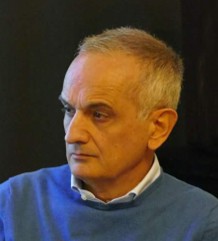
Prof. Domenico Talia
University of Calabria, Italy
Noida University, India
Co-founder DtoK Lab
Short Biography
Domenico Talia is a full professor of computer engineering at the University of Calabria, Italy and an Honorary professor at Noida University, India. He is a co-founder of the start-up DtoK Lab. His research interests include Big Data analysis, artificial intelligence, high-performance computing, parallel and distributed machine learning, Cloud computing, social data analysis, and parallel programming models and languages. Domenico Talia has published 10 books and more than 400 papers in archival journals such as Communications of the ACM, IEEE TPDS, IEEE Computer, IEEE TKDE, IEEE TSE, IEEE TSMC-A, IEEE TSMC-B, IEEE Micro, ACM Computing Surveys, FGCS, Parallel Computing, IEEE Internet Computing, and highly reputed conference proceedings. He is a member of the editorial boards of IEEE Computer, ACM Computing Surveys, the Future Generation Computer Systems journal, and other archival journals. He served as a program chair or program committee member of many international conferences. Talia has been the recipient of the Euro-Par Achievement Award 2025. He is a senior member of the Association for Computing Machinery (ACM) and IEEE Computer Society and has been a reviewer for several research agencies and public administrations.
Keynote Title
Techniques for Exploiting Machine Learning and Explainable Artificial Intelligence in Healthcare
Keynote Abstract
Artificial intelligence techniques and systems are demonstrating their effectiveness in solving problems in many application areas, including healthcare. Over the years, several studies focused on leveraging machine learning and deep learning techniques to identify diseases in patients. However, while these techniques have demonstrated remarkable accuracy in diagnosis, they often operate as “black box” models, meaning they provide outputs without clear explanations of the rationale behind their decisions.
In response to this challenge, explainable artificial intelligence (XAI) has emerged as a research area aiming at providing not only accurate diagnoses but also understandable and interpretable explanations for the decisions made by AI models.
For providing explanations Large Language Models (LLMs) may be exploited. This talk introduces and discusses cutting-edge XAI techniques for healthcare applications, which hold the promise of enhancing trust, enabling clinicians to better understand and contextualize AI results, and ultimately improving patient care. Some significant case studies are presented.